
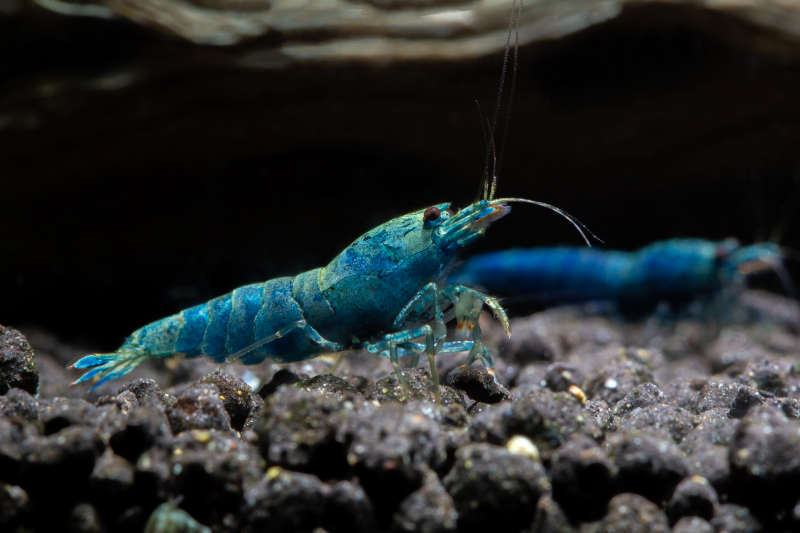
Blue Bolt Shrimp (Caridina cf. cantonensis var. ‘Blue Bolt’, also known as Taiwan Bee Blue Bolt or Extreme Blue Bolt in high grades) are a premium, selectively bred freshwater aquarium shrimp celebrated for their intense, metallic electric blue coloration that often covers most or all of the body. A variant of the Taiwan Bee lineage (like Crystal Red/Black), Blue Bolts feature striking sapphire to deep cobalt blue with mottled, marbled, or solid patterns — giving them a lightning-like “bolt” of vibrant blue that glows under aquarium lights, especially in planted or dark-substrate setups.
Key Features & Appearance
- Coloration: Electric metallic blue dominant; high-grade (S-SSS+) lines show solid/deep blue with minimal white or translucent areas, bold mottling, or “extreme” coverage for maximum intensity.
- Size: Adults typically 1–1.2 inches (2.5–3 cm); juveniles develop color progressively.
- Behavior: Peaceful, somewhat shy grazers that forage on biofilm, algae, detritus, and decaying matter — superb for natural cleanup. They thrive in groups (10+ for colony confidence and breeding) and are active but prefer hiding spots.
- Lifespan: 1–2 years with top-tier care.
These sensitive Caridina are for experienced keepers but deliver one of the most electrifying colors in the hobby when conditions are dialed in.
Care Requirements
- Tank Size: 10+ gallons recommended; larger for parameter stability in sensitive colonies.
- Water Parameters (critical):
- Temperature: 20–26°C (68–79°F); optimal 22–24°C — consistency is key.
- pH: 5.8–6.8 (acidic; RO water remineralized with bee shrimp salts).
- GH: 4–6, KH: 0–2 (very soft, low carbonate to aid molting).
- TDS: 120–180 ppm typical for premium Blue Bolts.
- Setup Tips: Buffering active substrate (e.g., ADA Amazonia), heavy moss (Java/Christmas), botanicals (Indian almond leaves, alder cones), driftwood, leaf litter for biofilm/hiding/acidity. Low-flow sponge filters safeguard shrimplets; no copper, no parameter swings.
- Diet: Biofilm/algae focus; supplement lightly with shrimp foods, blanched veggies, or pellets — avoid overfeeding to prevent crashes.
- Compatibility: Shrimp-only or ultra-peaceful nano tanks (small rasboras, otos, snails). No aggressive fish, no mixing with other Caridina types (cross-breeding risks), no unstable setups.
Breeding: Females carry turquoise/blue eggs/saddle, hatching 10–30+ shrimplets after 3–5 weeks. Soft/acidic stability and cover are essential for fry success.
At Valley Aquatics, Blue Bolt Shrimp are a high-end highlight for Abbotsford’s serious planted-tank crowd
Reviews
There are no reviews yet.